
.svg)

3
Min reading
Phone charging stations at music festivals: managing the flow of thousands of festival-goers
Posted on
July 24, 2026


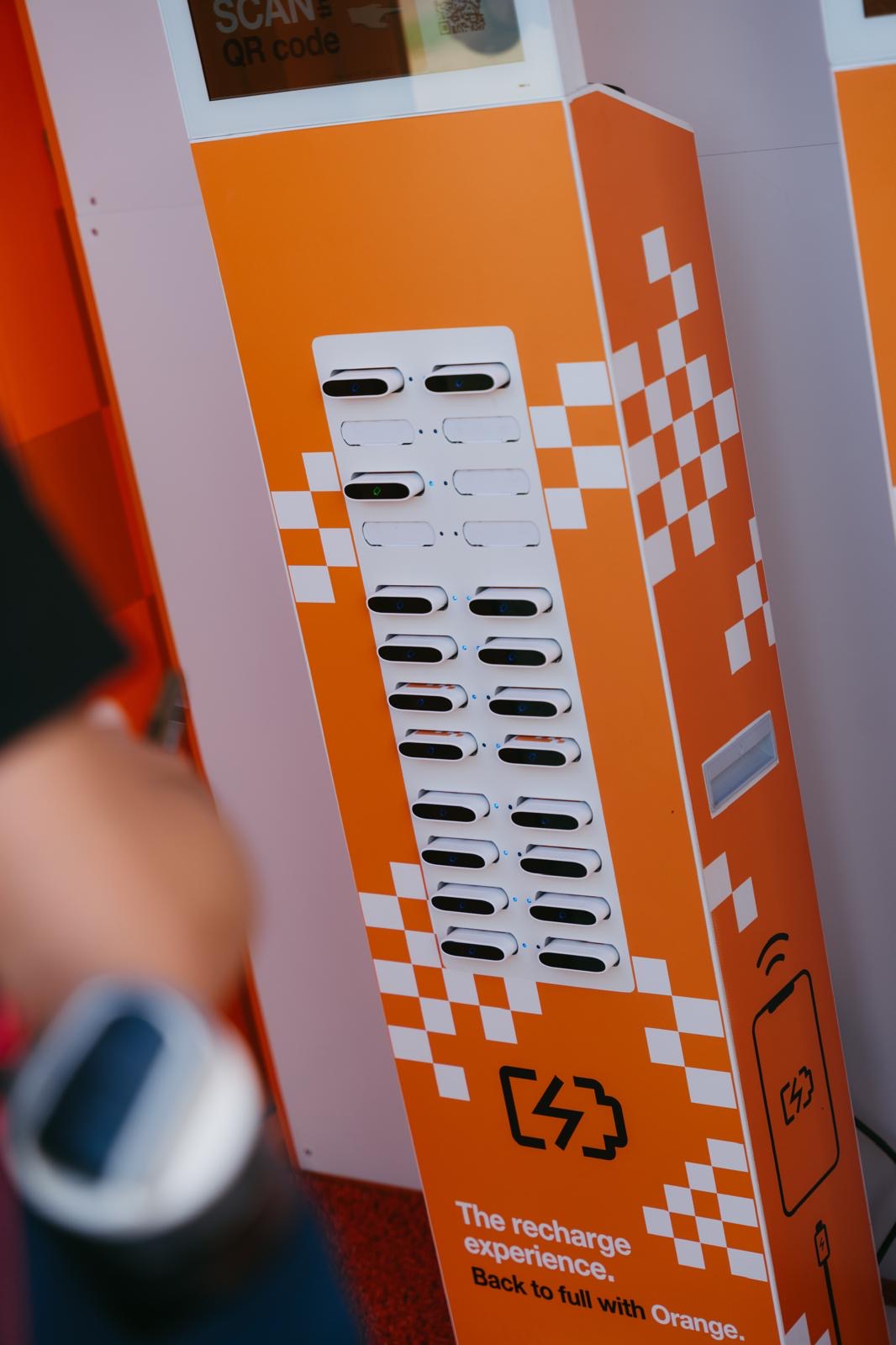
A music festival brings thousands of people together in one place, often outdoors, for several consecutive days. The smartphone plays a central role: recording concert videos, making contactless payments at food stalls, locating friends in the crowd, and, most importantly, staying in touch with loved ones if the group gets separated. At an event like this, a dead battery isn't just an inconvenience—it's a genuine risk to safety and the overall festival experience. The portable phone charging station , deployed at multiple points across the site, has become as essential as water stations or restrooms.
A context radically different from indoor venues
Unlike a trade show (see our article on charging stations for trade shows), a music festival presents its own unique challenges:
- exposure to the elements : rain, dust, and heat, sometimes for several days in a row,
- lack of standard power outlets across most of the site,
- massive, concentrated crowds during specific time slots (before/after a headlining concert),
- intensive mobile network usage, which itself accelerates battery drain.
Charging equipment deployed in these settings must be robust, energy-independent (often via generators or solar panels), and designed for prolonged outdoor use, unlike hotel or shopping mall furniture, which is designed for indoor aesthetics.
Where to position charging stations on-site
At a festival, the most strategic areas are generally:
- Food and bar areas, where festival-goers naturally take longer breaks.
- Meeting points, often marked on the festival map, where groups arrange to meet up.
- Near secondary stages, between sets, rather than in front of the main stage where crowd density makes installation impossible.
- Near rest areas and shaded spots, especially in the afternoon at festivals in direct sunlight.
Contactless payment and staying in touch: two priority use cases to secure
At a festival, smartphone battery life directly impacts two critical needs:
- contactless payment or via cashless payment (a connected wristband linked to an app), which requires a powered-on phone to top up your balance or check your purchases,
- the tracking and locating loved ones, which is essential in a dense crowd where it is easy to get separated, including for safety reasons in the event of an incident.
A self-service charging station that requires no app download makes these two uses secure without adding technical friction for an audience already in a festive mood and unlikely to follow an installation tutorial.
Charging without an app: a field imperative
Unlike a B2B trade show where visitors are familiar with professional digital tools, a festival audience is extremely diverse in terms of tech-savviness. The charging solution must therefore be simple to use: drop off your phone or borrow a power bank without creating an account, using a return system based on a token, wristband, or card rather than a dedicated app.
At large gatherings like a multi-day music festival, this choice also avoids saturating the local mobile network, which is often put under heavy strain by thousands of smartphones active simultaneously.
FAQ — Phone charging stations at music festivals
How do the stations withstand the elements (rain, dust)? Equipment deployed outdoors must have an Ingress Protection (IP) rating suitable for moisture and dust, with a waterproof casing and a secure power supply, regardless of the festival's weather conditions.
How do you manage charging for several thousand festival-goers at once? By deploying multiple medium-sized charging points across the site rather than relying on a single large centralized station, which helps limit queues and distribute the load across the festival's various activity zones.
Is a dedicated app required to use the stations? No, it is actually discouraged for this type of audience: an app-free system based on a token or card ensures immediate adoption without any technical friction.
How can phones be kept secure while charging? Individual locked lockers or a portable power bank rental system with a security deposit help prevent theft in high-traffic areas.
Is an independent power supply required on-site? In most cases, yes: generators or solar solutions are necessary, as most festival grounds do not have an electrical grid capable of supporting all the charging stations.
Capture their data!

Capture them hot!





Benjamin
Rédacteur